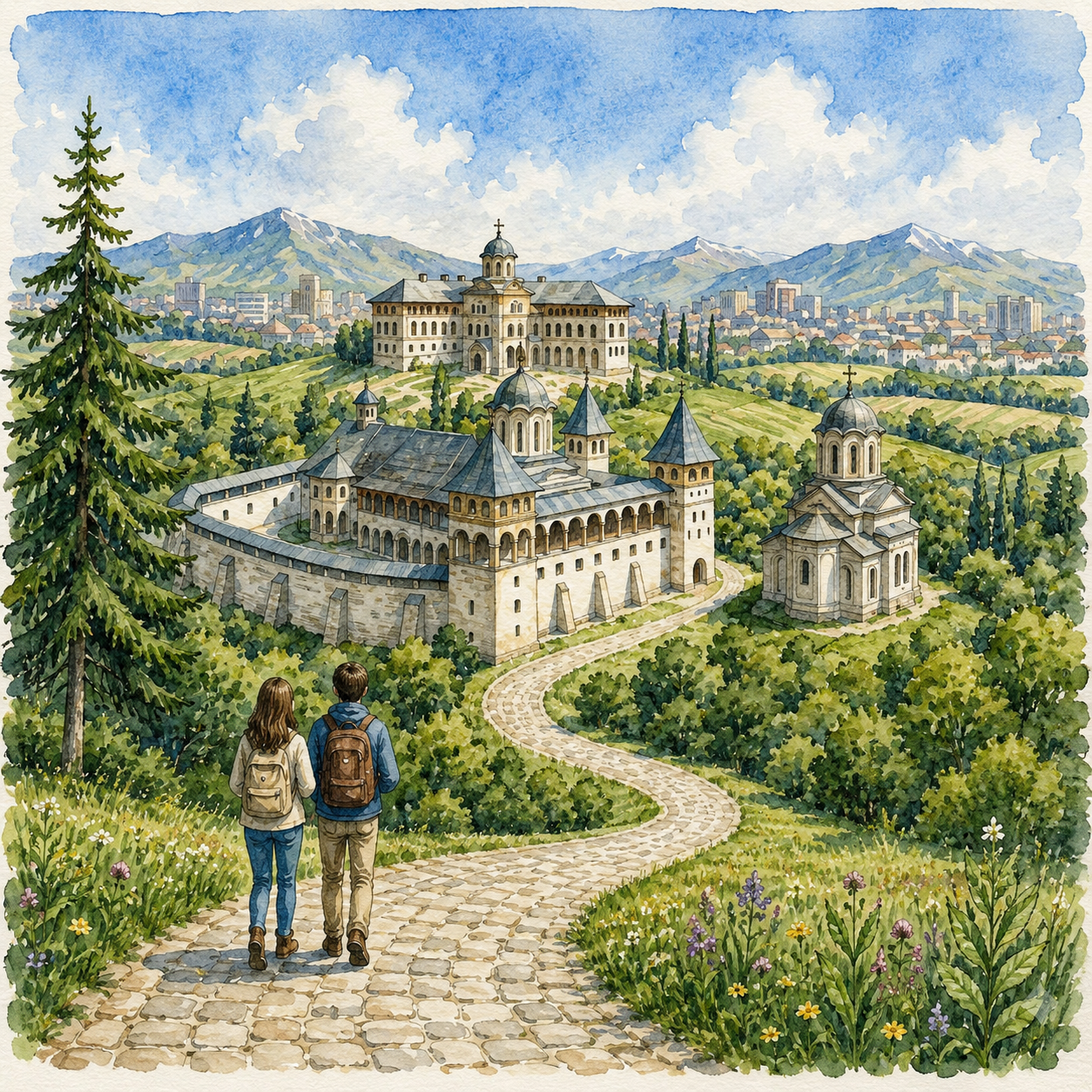
The Brâncovenesc Route
Horezu → Arnota → Brâncoveni → Craiova
The Brâncovenesc Route is a cultural-historical route that follows the legacy of Prince Constantin Brâncoveanu and the influence of the Brâncovenesc style in Oltenia. It covers the counties of Vâlcea, Olt and Dolj and can be completed in a weekend or 2 days, being an easy, predominantly car-based route.
The ideal period is April-October. The route is worth taking for its historical coherence, architectural heritage, and the cultural importance of the Brâncovenesc era.
Information
Duration:
2 days
Approximate distance: ~220 km
Route type:
car
Difficulty level: easy
Suitable for: history enthusiasts, students, seniors, cultural tourists
Historical context of the route
The dominant period of the route is the end of the 17th century – the beginning of the 18th century, corresponding to the reign of Constantin Brâncoveanu (1688–1714).
This is one of the most prosperous cultural periods in Wallachia, characterized by the emergence of the Brâncovenesc style, a synthesis of Byzantine architecture, Renaissance influences, and traditional Romanian elements.
Oltenia played a major cultural role, being an important center for printing, religious constructions, and the affirmation of Romanian identity.
Legends vs. historical facts
Documented facts
-Constantin Brâncoveanu was a great founder of churches and monasteries
-The Brâncovenesc style is architecturally attested in Horezu and Craiova
-Brâncoveni is the place of origin of the Brâncoveanu family
Legends
-stories about secret tunnels or hidden treasures at some monasteries
-symbolic interpretations of frescoes
Controversies
-the exact degree of the ruler's personal involvement in certain constructions
-subsequent reconstructions that altered the initial form of some buildings
Key historical figures
Constantin Brâncoveanu
–ruler of Wallachia
Constantin and Ștefan Cantacuzino – members of the political elite
Oltenian boyars – supporters of culture and constructions
Brâncoveanu family – symbol of the era
Recommended visiting order
-chronological route: from monastic foundations to administrative centers
-thematic route: Brâncovenesc style and cultural heritage
-historical route: from monastic areas to urban centers
Detailed itinerary
Stop 1: Horezu Monastery (Vâlcea)
A masterpiece of Brâncovenesc style, included in the UNESCO World Heritage.
Visiting time:
1–1.5 hours
Cost:
free
Useful tip:
start the route in the morning for good light and quiet
Stop 2: Arnota Monastery
An old foundation, rebuilt in the Brâncovenesc era, with a strategic position and symbolic value.
Visiting time:
45–60 minutes
Cost:
free
Useful tip:
access requires a mountain road; check its condition
Lunch break – Costești / Horezu area
Recommendation:
traditional guesthouses
Average price:
40–60 lei / person
Stop 3: Brâncoveni (Olt)
The family's place of origin Brâncoveanu, with historical vestiges and old churches.
Visiting time:
~1 hour
Cost:
free
Useful tip:
do your research beforehand; explanatory panels are limited
Stop 4: Craiova – urban Brâncovenesc center
Brâncovenesc influences in the city's architecture, the Art Museum in the Jean Mihail Palace and the historic center.
Visiting time:
2–3 hours
Cost:
museums – for a fee
Useful tip:
set aside special time for the Art Museum
How to get to the starting point
From major cities: Bucharest → Râmnicu Vâlcea → Horezu
Main roads: DN67, DN65
Estimated time: Bucharest – Horezu: ~3.5–4 hours
When to take the route
Ideal season:
April – October
Periods to avoid: winter (mountain roads)
Alternative option: shortened route to Craiova in case of unfavorable weather
Estimated budget
Transport:
150–250 lei
Accommodation (1 night): 150–300 lei
Meals:
100–150 lei
Admissions / museums:
20–40 lei
Estimated total / person: 350–550 lei
Useful tips
-prior research on the Brâncovenesc era
-comfortable footwear
-flexible schedule for monastic objectives
The Brâncoveanu Route is a coherent immersion into one of the most important cultural eras in Romanian history. It harmoniously links religious heritage, political history and urban development, offering an educational and memorable experience.