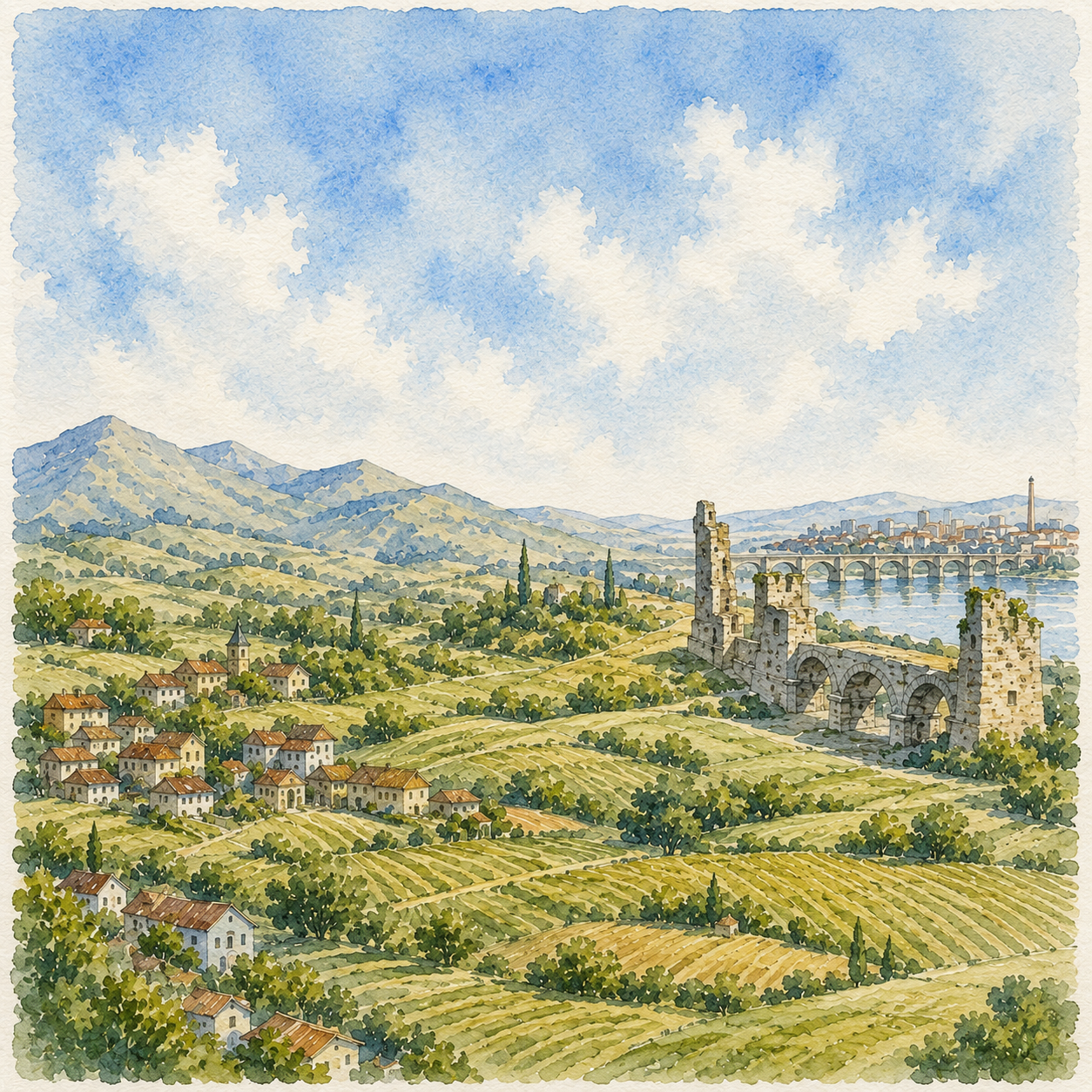
The Roman Route in Oltenia
Drobeta → Romula → Sucidava
The Roman Route in Oltenia is a fascinating journey through the vestiges of one of the most powerful civilizations of Antiquity, the Roman Empire. From the impressive castrum and Trajan's Bridge at Drobeta, to the Roman cities of Romula and Sucidava, the route reveals the strategic role of Oltenia in the Dacia Malvensis province. It is an educational, accessible route, ideal for history, archaeology, and heritage enthusiasts.
Quick Route Facts
Route type: cultural – historical
Area covered: Mehedinți, Olt counties
Total duration: 2 days
Difficulty: easy
Ideal period: April – October
Why it's worth taking: major Roman sites, unique archaeological heritage, ancient history lesson
Information
Duration: ~2 days
Approximate distance: ~260 km
Route type: by car
Difficulty level: easy
Suitable for: students, cultural tourists, history enthusiasts
Detailed Itinerary
Day 1 – Drobeta-Turnu Severin
Stop 1: Iron Gates Region Museum
What you see here: Roman vestiges, model of Trajan's Bridge
Visiting time: 1–1.5 hours
Cost: museum ticket
Stop 2: Drobeta Castrum & ruins of Trajan's Bridge
What you see here: bridge foundations and Roman fortification
Visiting time: 45–60 minutes
Cost: free
Lunch break
Recommendation: restaurants in Drobeta-Turnu Severin
Average price: 40–60 lei / person
Recommended accommodation
hotels or guesthouses in Drobeta-Turnu Severin
Day 2 – Drobeta → Romula → Sucidava
Stop 3: Romula (Reșca, Olt county)
What you see here: ruins of the former capital of Dacia Malvensis province
Visiting time: 45–60 minutes
Cost: free
Stop 4: Sucidava (Celei – Corabia)
What you see here: Roman-Byzantine fortress, the famous „secret fountain”
Visiting time: ~1 hour
Cost: free
Historical context
Dominant period: 2nd–4th centuries AD
Role: strategic Roman province on the Lower Danube
Importance: defense of the Danubian limes and control of trade routes
Legends vs. historical facts
Documented
-existence of Roman cities and provincial administration
-defensive and commercial role of the Danube
Legends
-extensive secret passages under the Danube
-mysterious functions of some underground constructions
Controversies
-exact extent of Trajan's Bridge
-actual size of Roman cities in southern Dacia
Key historical figures
Emperor Trajan
Apollodorus of Damascus – architect of Trajan's Bridge
Roman governors of Dacia Malvensis province
When to take the route
Ideal season: spring and autumn
Periods to avoid: summer (high temperatures)
Alternative: museum visits on very hot days
Estimated budget
Transport: 300–350 lei
Accommodation: 150–220 lei / night
Meals: 150–200 lei
Entrance fees: 30–40 lei
Estimated total / person: 650–750 lei
Useful tips
-wear comfortable shoes
-read about Roman Dacia before leaving
-combine the route with a walk on the Danube
The Roman Route in Oltenia is an open-air history lesson, bringing the Roman era back to life on Romanian territory. It is a valuable educational and cultural route, accessible and impressive due to its historical importance.